
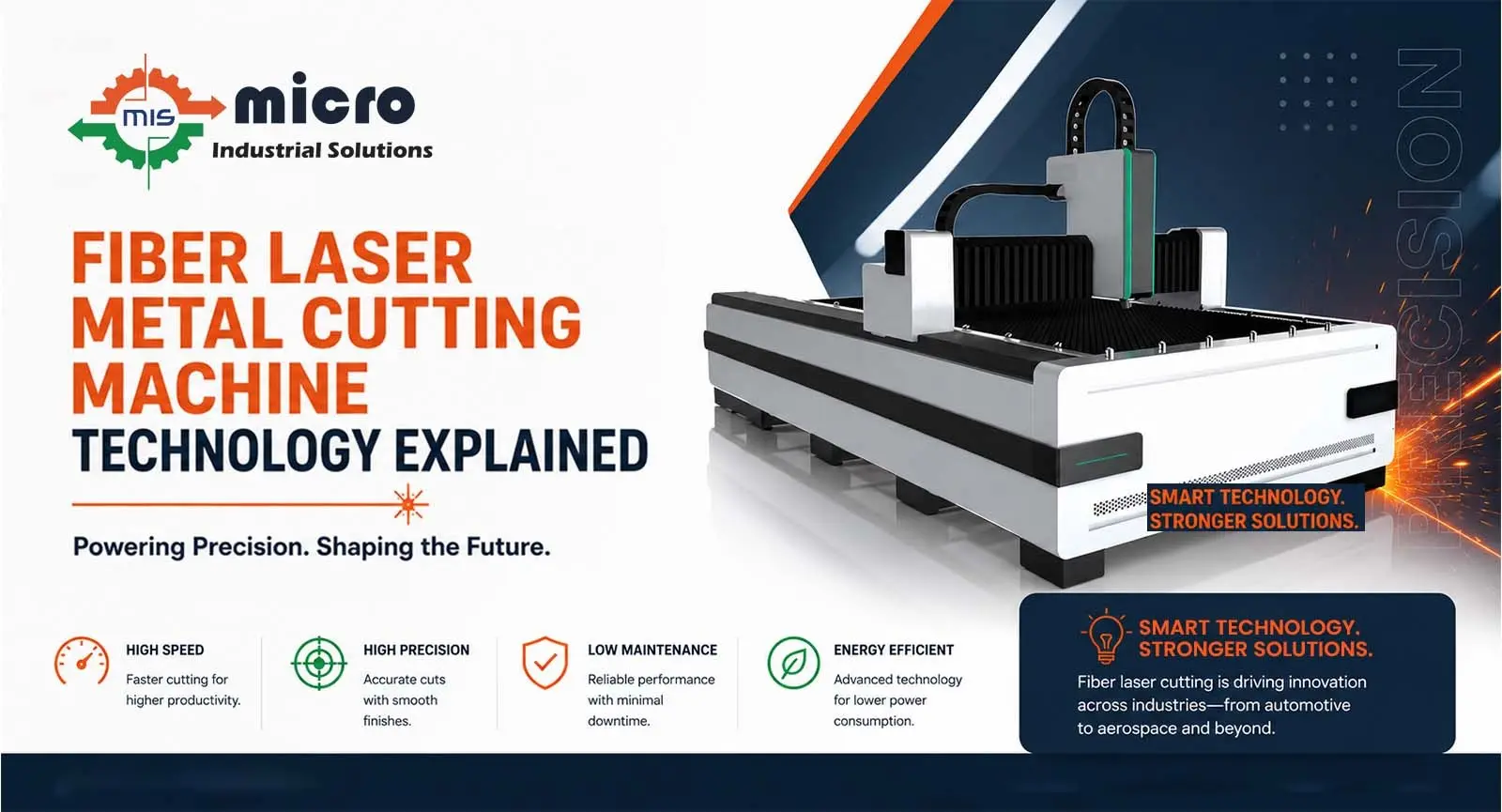
If you’re in metal fabrication, you’ve probably heard about fiber laser metal cutting machines taking over shops. They cut faster than older methods, give cleaner edges, and cost less to run over time. But if you’re thinking about buying one, there’s real confusion about what actually matters when you’re looking at specs and options.
The truth is, fiber metal cutting machines aren’t all built the same. Some burn through thin sheets fast but can’t handle anything over 10 mm. Some work on multiple materials but need constant tweaking. Pick the wrong cutting machine, and you’ll end up with slow output, edges that need grinding, or a machine that just can’t do what you need it to do.
This guide breaks down this cutting machine technology without the jargon. You’ll understand how it works, what materials it handles, and what to check before you commit to buying.
Why Fiber Laser Metal Cutting Machine Technology Matters?
Plasma cutters, oxy-fuel torches, and punch presses still work for low-volume jobs. But once production ramps up, you see the problems. Edges turn rough. Parts don’t stay within tolerance. Setup between jobs eats up half your day.
A fiber laser metal cutting machine solves these issues. No tool wears out as you get with mechanical cutting. The beam stays focused, so every cut looks the same whether it’s the first part or the thousandth. You can run it unattended for hours if you need to. The right cutting machine cuts labour hours, reduces the need for secondary work, and keeps your shop competitive on both speed and accuracy.
How This Machine Actually Works?
When you’re looking at a fiber laser metal cutting machine, you’re really looking at four main parts that need to work together.
The laser source is what makes the beam. Fiber lasers pump energy through fiber optic cables instead of using the mirrors and tubes that CO₂ lasers need. They waste less energy, you don’t have to realign optics constantly, and the beam quality stays steady over months of running. Most machines you’ll see range from 1kW up to 12kW, and the power you need depends on what thickness you’re cutting.
The cutting head is what focuses that beam down onto the metal. It has lenses inside, a nozzle for the gas, and sensors that keep the head at the right distance from the surface as it moves. Better cutting heads will shift focus and gas settings automatically when you switch from carbon steel to stainless, so you’re not spending time adjusting between jobs.
The motion system is what moves the head across the material (or moves the table under the head). Most newer fiber laser metal cutting machines use rack-and-pinion drives with servo motors. The key here is how fast it can accelerate and slow down—bad acceleration means rough cuts at corners and tight turns.
The assist gas blows through the nozzle to push molten metal out of the cut. For carbon steel, oxygen works because it adds heat as it oxidises. For stainless steel and aluminium, you use nitrogen to get a clean edge without oxidation. Air is cheaper but leaves more dross behind.
What Materials This Machine Cuts?
You can’t assume one metal cutting machine does everything the same way. Here’s what you actually get with different materials:
Carbon steel is where fiber laser metal cutting machines shine. You can cut up to 25 mm thick with high-power units. The edge comes clean, speed is fast, and oxygen assist gives you that extra heat boost for thicker sections.
Stainless steel needs nitrogen to keep the edge oxide-free. Depending on your power level, you can go up to 20mm thick. Machines handle the reflective nature of stainless steel better than the old CO₂ lasers did.
Aluminium is reflective and conducts heat, which used to be a problem for lasers. But newer cutting machines cut aluminium up to 15mm with the right settings. You’ll need more power for thicker sections, and the edge quality is decent but not as clean as stainless.
Copper, bronze, and brass are the tough ones. They’re highly reflective and can send energy back into the laser source. Newer machines have protection against this back-reflection. You’re limited to under 10mm thickness, but it’s doable.
Mild steel is the most common material. A fiber cutting machine cuts mild steel faster than anything else up to about 20 mm. Once you go thicker, plasma or oxy-fuel might be cheaper per cut.
What Speed and Thickness You Can Actually Expect?
This is where you need to match power to what you’re actually cutting.
A 3kW fiber laser metal cutting machine will cut 1mm carbon steel at around 20 metres per minute. Step up to 6 kW, and you’re pushing 40+ m/min on that same thickness. But as thickness goes up, speed drops—10 mm carbon steel on a 6 kW machine runs at 4-6 m/min.
On stainless steel, a 4kW metal cutting machine cuts 2mm at 25 m/min and 10mm at 5 m/min. Aluminium is slower—3 mm at 15 m/min on that same 4kW unit.
Figure out what thickness you’re cutting most often. If it’s mostly a 1-3 mm sheet, a 3kW cutting machine is enough. If you’re regularly hitting a 10-20 mm plate, you need 6 kW or higher.
Mistakes Buyers Make That Cost Them Later
- Buying a lower-power machine than your thickness needs means you’ll be slow and frustrated every day
- Ignoring beam quality—cheap fiber laser metal cutting machines don’t focus well, so edge quality sucks
- Not investing enough in the motion system—inaccurate rack-and-pinion means your cuts wander
- Not calculating gas costs—using nitrogen for stainless adds real operating expense over time
- Skipping automation when you need it—load/unload systems save hours when you’re running high volume
- Assuming every metal-cutting machine is the same, build quality changes how it performs long-term
Questions to Ask Before You Buy
- What thickness am I cutting most? (1-3mm = 3kW, 5-10mm = 4-6kW, 10-20mm = 6-12kW)
- What materials? (Carbon steel only, stainless, aluminium, or mixed?)
- How much volume? (Low = manual load; High = automated loader)
- What’s the budget? (Import options are cheaper upfront; premium brands cost more but last longer.)
- Need automation? (Sheet racks, auto-unload, material-handling systems)
- Gas setup in place? (Nitrogen generator for stainless steel, oxygen for carbon steel)
Why Micro Industrial Solutions is Different?
When you’re looking for fiber laser metal cutting machine suppliers, there are a lot of choices out there. Micro Industrial Solutions doesn’t just push machines—they figure out what you need. Their engineers review your material specs, production volume, and budget, then recommend the laser cutting machine that fits without cutting quality.
Micro Industrial Solutions builds cutting machines for actual shop use. Tight tolerances, reliable laser sources, good motion systems, and support that doesn’t disappear after you sign. Whether you need a 3kW machine for sheet work or a 12kW one for heavy plate, they’ll set you up with the right one.
Bottom Line
Metal cutting goes wrong when you pick the wrong cutting machine. Think about material type, thickness, speed you need, budget, and whether you need automation before you buy. The right metal cutting machine pays back through labour savings, less grinding and finishing, and edges that don’t need work.
If you’re not sure what fits your shop, talk to Micro Industrial Solutions. The engineers walk you through cutting machine options and get you the equipment that works for your operation.
FAQ: Fiber Laser Metal Cutting Machine
1. What's the real difference between 3kW, 6kW, and 12kW fiber laser metal cutting machines?
Power determines what thickness you can cut and how fast. A 3kW fiber laser metal cutting machine handles 1-6mm sheets well. A 6 kW cutter cuts up to a 12-15 mm plate. 12kW goes through 20mm+ thick material. Higher power also means faster speeds on thin sheets.
2. Can a fiber laser metal cutting machine actually cut copper and aluminium?
Yes. Modern fiber laser metal cutting machines have back-reflection protection built in. Aluminium up to 15mm works. Copper and bronze are limited to under 10mm because they're so reflective.
3. Should I use nitrogen or oxygen for the assist gas?
Oxygen for carbon steel—it adds heat through oxidation and cuts thicker plates faster. Nitrogen for stainless and aluminium—clean edge, no oxidation, but costs more. Air works for some jobs but leaves more dross.
4. How does a fiber laser metal cutting machine compare to old CO₂ lasers?
Fiber laser metal cutting machines are more efficient (30-40% vs 10-15% for CO₂), need less maintenance (no mirrors to align), and cut reflective materials better. CO₂ still works on very thick non-reflective stuff, but fiber is what shops use now.
5. Why pick Micro Industrial Solutions over other fiber laser metal cutting machine suppliers?
Micro Industrial Solutions reviews your material specs, volume, and budget before recommending a fiber laser metal cutting machine. You get a setup built for your needs without cutting quality. Their fiber laser metal cutting machines have tight tolerances, good laser sources, reliable motion systems, and real support after you buy.

Micro Industrial Solutions
Micro Industrial Solutions is a well-known manufacturer of marking machines in India. Our company has been providing quality services to clients since 2014.